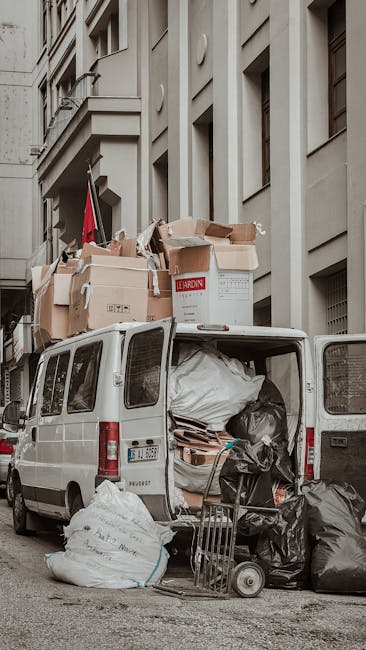
What to Do with Bulky Waste After a St James's Move
Moving out of St James's often leaves you staring at one awkward pile: the bulky stuff. The sofa that looked fine in the old flat but won't fit the new one. A mattress that has had a fair run. Wardrobes, shelves, broken desk chairs, exercise equipment, the lot. It's rarely glamorous, and it never seems to sort itself out on moving day, does it?
What to do with bulky waste after a St James's move depends on the item, its condition, your timing, and how much effort you want to put in. Some pieces can be reused or sold, some need specialist removal, and some are best sent for responsible recycling. The trick is making a plan before the van arrives, not after you've already signed the handover paperwork and discovered the lift has a mind of its own.
This guide walks you through the practical options, the common mistakes, and the easiest way to clear bulky items without turning your move into a second job. Along the way, you'll also find useful internal resources on decluttering, heavy lifting, furniture removals, and storage, so you can make better decisions at each stage.
Table of Contents
- Why bulky waste planning matters after a St James's move
- How bulky waste disposal and removal typically works
- Key benefits and practical advantages
- Who this is for and when it makes sense
- Step-by-step guidance for handling bulky items
- Expert tips for better results
- Common mistakes to avoid
- Tools, resources and recommendations
- Law, compliance, standards and best practice
- Options, methods and comparison table
- Case study or real-world example
- Practical checklist
- Conclusion
- Frequently asked questions
Why What to Do with Bulky Waste After a St James's Move Matters
Bulky waste is one of those moving problems people underestimate until the last minute. Small boxes are easy enough. But a broken bookcase or old mattress occupies space, gets in the way, and adds pressure right when you need calm and clearance. In central London, that matters even more because access can be tight, parking is rarely generous, and a single oversized item can slow everything down.
There's also the practical side. If you leave bulky waste until after moving day, you risk paying more, making multiple trips, or cluttering the new place before you've even unpacked. Nobody wants their first evening in a new home to involve stepping round an abandoned wardrobe side panel and wondering what on earth to do next.
For many movers, the aim is not simply disposal. It's deciding whether an item should be reused, repaired, stored, donated, or removed professionally. That decision saves time and often saves money too. If you're already decluttering, our guide on how to declutter for an effortless moving day is a sensible place to start.
And if you're moving larger household items in general, it helps to understand the physical side as well. A lot of bulky waste starts out as something that was just too heavy, awkward, or awkwardly shaped to move safely. That's where practical lifting knowledge and good planning matter. The article on moving heavy objects safely is useful background if you're sorting things yourself.
How What to Do with Bulky Waste After a St James's Move Works
At a basic level, the process is simple: identify the item, decide whether it has value, and choose the most suitable route for removal or reuse. In practice, though, the decision tree can be a bit messy. A sofa may be structurally sound but stained. A bed frame may be reusable, but the mattress may not. A dining table may need dismantling before it can leave the property. One item can turn into four decisions very quickly.
Most people end up using a mix of methods:
- Reuse or sell if the item is still in good condition.
- Donate if it is clean, functional, and likely to be accepted.
- Store temporarily if you are not yet ready to part with it.
- Arrange professional removal for heavy, awkward, or high-volume items.
- Recycle or dispose responsibly when the item has reached the end of its life.
In real moving situations, the best choice often depends on logistics rather than sentiment. A desk might have been with you for years, but if it won't fit through the staircase in the new place, that's the answer right there. Truth be told, bulky waste is often less about disposal and more about making a clean, sensible judgement before the move becomes chaotic.
For furniture-specific support, you can also look at furniture removals in St James's, which is particularly relevant if the item is large enough to need careful handling rather than simple lifting.
Key Benefits and Practical Advantages
Handling bulky waste properly after a St James's move brings more than one benefit. It reduces stress, keeps your move organised, and makes the new property feel liveable faster. That sounds obvious, but the difference can be huge when you're arriving with only a few hours of daylight left and a hallway full of boxes.
Here are the main advantages:
- Less clutter at the new property - you can unpack without working around old furniture.
- Safer moving conditions - fewer obstacles mean fewer trips, trips and strains.
- Better cost control - deciding early helps you avoid rushed last-minute arrangements.
- More responsible disposal - reusable items can be kept in circulation longer.
- Faster room planning - it is much easier to arrange a new space when you know what is definitely coming with you.
There is also a quieter benefit: a sense of closure. A move can leave you mentally tangled up with old furniture, old habits, old "I'll deal with that later" corners of the house. Clearing bulky waste properly gives the whole move a cleaner ending. Small thing, maybe. But it matters.
If you are planning to put items away temporarily, our guide on keeping sofas in good condition during storage may help you decide whether storing is actually worth it.
Who This Is For and When It Makes Sense
This topic matters to almost anyone moving home in St James's, but especially if you are dealing with:
- Flat moves where stairs, lifts, or tight corridors make bulky items hard to remove.
- House moves where you are downsizing and cannot take everything with you.
- Student moves where low-value furniture is often not worth the transport cost.
- Last-minute relocations where you have limited time to organise collection or storage.
- Office or home-office moves where old chairs, desks, and shelving no longer serve the new setup.
It also makes sense when an item is technically movable but practically not worth keeping. For example, a mattress that has seen better days. Or a sofa that needs too much effort to shift for too little value in the new layout. Sometimes the decision is not sentimental at all. It is just tidy common sense.
For renters and people moving into smaller central London spaces, the question is often whether to store or dispose. If you are unsure, storage in St James's can be a useful short-term option when you need a bit of breathing room before choosing what stays.
Step-by-Step Guidance
Here is a clear way to handle bulky waste after your move, without overcomplicating it.
- Walk through each room before moving day. Make a separate list for items you will keep, store, donate, sell, or dispose of.
- Check condition honestly. Ask yourself whether the item is clean, safe, and likely to be accepted elsewhere. Be strict. A slightly wobbly shelf is not the same as a useful shelf.
- Measure access points. Measure doorways, stairs, lift capacity, and tight corners. A bulky item may need dismantling, or it may need to go a different way entirely.
- Separate reusable items from waste. Keep good-quality furniture apart from damaged pieces so you do not mix decisions later.
- Book the right type of removal. Use a service that suits the load, the access, and the timing. For larger homes, a full move via removals in St James's can be more efficient than trying to do multiple small journeys yourself.
- Prepare items for handling. Remove loose parts, tape drawers shut if needed, and protect surfaces that may scratch walls or lifts.
- Choose responsible disposal or recycling. Do not just dump things because they are in the way. Select a route that matches the item's condition and material.
- Confirm the end point. If you are donating, make sure the item meets acceptance criteria. If you are recycling, make sure it goes to a proper facility or collection route.
A small but useful point: deal with bulky waste before you pack your everyday essentials. If you wait until the end, the big pieces tend to dominate the whole day. Suddenly you are moving lamps, bags, boxes, and a six-foot wardrobe panel all at once. That is a headache nobody needs.
For even smoother packing around these decisions, these packing tactics for a worry-free move can help you keep the process orderly.
Expert Tips for Better Results
There are a few practical habits that make bulky waste easier to handle, and they are the sort of things people only usually learn after one too many awkward moves.
- Sort by material, not just by size. Wood, metal, fabric, and mixed-material items may need different routes.
- Keep screws, bolts, and fittings together. If you plan to reuse or sell a dismantled item, missing fixings can kill its value quickly.
- Use photographs early. Take a quick picture of anything you might sell or donate. It helps with decisions and saves rummaging later.
- Think about the new layout first. If an item has not already earned its place in the new property, maybe it is time to let it go.
- Protect floors and walls during removal. Cardboard, blankets, and basic corner protection can stop one awkward scrape turning into a repair job.
If an item is physically heavy or badly balanced, do not let stubbornness do the talking. The body notices. Often later that evening, in the kitchen, with a very unhelpful little ache in the back. That is where expert handling matters. You can read more about safer movement in the basics of kinetic lifting and better movement, which offers a useful perspective on protecting your body while moving.
If the item is a piano or something similarly specialist, do not treat it like ordinary bulky waste. That is a different category altogether. For that kind of move, the article on the risks of DIY piano moving is worth a look before you make a decision.
Common Mistakes to Avoid
Bulky waste problems usually come from one of a handful of mistakes. Most are easy to avoid once you know what to watch for.
- Leaving it too late. This is the big one. Once moving day starts, you lose flexibility.
- Assuming everything can be dumped. Some items need special handling, and some should be reused instead.
- Forcing oversized pieces through tight spaces. Just because it is possible in theory does not mean it is wise.
- Not checking item condition before booking disposal. You may be paying to remove something that could have been sold or donated.
- Skipping dismantling when it would help. Taking a table apart can save time, stress, and damage.
- Mixing rubbish with reusable items. Once sorted together, useful things can become much harder to rescue.
There is a subtler mistake too: forgetting about the old property after you have mentally moved on. Pre-moveout cleaning matters, especially where bulky items leave marks, dust, or hidden debris. If that is on your mind, the article on leave-no-dust-behind pre-moveout cleaning is a practical companion piece.
And if you are trying to decide what truly deserves the trip to the new address, it can help to revisit how to move house without stress. A calmer move tends to produce better decisions, funny enough.
Tools, Resources and Recommendations
You do not need a truck full of specialised kit to deal with bulky waste, but a few simple tools can make the job much easier.
| Tool or resource | Why it helps | Best for |
|---|---|---|
| Measuring tape | Checks doorways, stair widths, and item dimensions before moving | Large furniture, mattresses, wardrobes |
| Basic hand tools | Useful for dismantling beds, tables, and shelving | Flat-pack and assembled furniture |
| Protective blankets or wraps | Helps avoid scrapes on walls and floors during removal | Heavy or awkward items |
| Labels or sticky notes | Makes it clear what stays, what goes, and what needs attention | Whole-home sorting |
| Professional removal support | Saves time and reduces lifting risk for bigger jobs | Bulky furniture, mixed loads, urgent moves |
For many people, the simplest recommendation is to combine sorting with a removal plan. That way, you are not making emotional decisions in the middle of an exhausting day. You are making them in advance, with a kettle nearby and a bit more clarity.
If your move involves a lot of furniture, specialist furniture removals in St James's can be a smart option. And if you only need help with a smaller load or a one-off pickup, the broader services overview is a useful starting point.
Law, Compliance, Standards and Best Practice
When dealing with bulky waste in the UK, the main principle is simple: dispose of items responsibly and do not leave them where they could cause nuisance, obstruction, or illegal dumping concerns. Exact processes vary depending on the item and the service used, so it is wise to confirm what is accepted before you book anything.
Best practice generally includes:
- Using legitimate collection or recycling routes rather than fly-tipping or unverified disposal options.
- Checking whether items contain recyclable material such as metal or untreated wood.
- Handling hazardous or specialist waste separately where required.
- Choosing insured and safety-conscious movers for heavy or awkward items.
It is also sensible to review service terms and the practical details around security, insurance, and complaints handling before arranging a collection. That sounds a bit dry, I know, but it matters when you are entrusting someone with heavy furniture or fragile access routes. You can review the company's insurance and safety information, as well as the terms and conditions and complaints procedure, to understand expectations clearly.
For environmentally minded decisions, the page on recycling and sustainability is a sensible reference point. If an item can be kept in use or broken down responsibly, that is usually the better route.
Options, Methods and Comparison Table
There is no single best answer for every bulky item. The right method depends on condition, urgency, access, and value. Here is a simple comparison to help you choose.
| Method | Best for | Pros | Limitations |
|---|---|---|---|
| Reuse or sell | Good-condition furniture and appliances | Can recover value, keeps items in use | Needs time, good photos, and suitable demand |
| Donation | Clean, functional, desirable items | Practical and socially useful | Not every item will be accepted |
| Storage | Items you may need later | Buys time for decisions | Can become an expensive pause if you delay too long |
| Professional removal | Large, heavy, or awkward items | Efficient and safer for tight access | Cost depends on load and timing |
| Responsible disposal/recycling | Broken or unusable items | Clears space properly | May require preparation or segregation |
For many St James's moves, the most effective approach is a hybrid one: sell or donate what is still useful, store what you are unsure about, and arrange removal for everything else. Simple, not always easy. But simple.
Case Study or Real-World Example
Consider a typical small-flat move near St James's. The occupant is leaving a one-bedroom property and moving into a slightly smaller place with a sharper layout. They have a large sofa, an ageing mattress, a broken office chair, and a pine shelving unit that looked charming five years ago but now wobbles in a way that feels emotionally significant.
At first, the plan was to take everything. Then the measurements were checked. The sofa would fit the new place, but only just, and only after manoeuvring through a narrow corridor. The shelving unit would not. The mattress was not worth carrying. The office chair had no resale value. That changed the picture quickly.
The practical choice was:
- Keep the sofa and move it carefully with furniture protection.
- Dispose of the mattress responsibly.
- Recycle the broken chair.
- Remove the shelving unit through a professional bulky-item service.
The result was a move with fewer items, less stress, and a cleaner first night in the new home. No mystery pile in the hallway. No "we'll sort that later" boxes taking over the corner. Just a room that could actually be lived in.
That kind of outcome is exactly why planning bulky waste early pays off. It gives you back control at a time when everything else feels slightly out of your hands.
Practical Checklist
Use this checklist before and after your St James's move to keep bulky waste under control.
- Walk through each room and identify bulky items separately from boxes.
- Decide whether each item will be kept, sold, donated, stored, or removed.
- Measure large items and check access routes at both properties.
- Dismantle anything that would be safer or easier in parts.
- Set aside screws, fittings, and accessories in labelled bags.
- Take photos of items you may sell, donate, or store.
- Protect floors, walls, and corners during removal.
- Confirm the disposal, recycling, or collection route in advance.
- Keep hazardous or specialist waste separate if relevant.
- Review the new home layout before deciding what bulky items deserve the space.
Expert summary: the best approach is usually the least dramatic one. Sort early, measure honestly, and choose the route that suits the item's actual condition, not the story you tell yourself about it. That one habit alone prevents a lot of moving-day frustration.
Conclusion
Dealing with bulky waste after a St James's move does not have to be chaotic. Once you decide what is worth keeping, what can be reused, and what should be removed responsibly, the rest becomes much easier. The key is to make those decisions before the day is already full of boxes, keys, stairwells, and half-open doors.
Use storage when it buys you time, use professional removal when the item is too awkward to handle safely, and use recycling or disposal routes that feel clean and responsible. That is the real answer to what to do with bulky waste after a St James's move: not one fixed solution, but a practical plan built around your items and your timeline.
If you are still comparing your options, it can help to check the relevant service pages, review safety details, and get clear on pricing before you commit. A calm move is rarely a perfect move, but it can absolutely be a well-handled one.
Get a free quote today and see how much you can save.
And if all else fails, remember: every move has one awkward item. It's almost a rule. The good news is, it usually gets easier once you stop arguing with the wardrobe.
Frequently Asked Questions
What counts as bulky waste after a move?
Bulky waste usually means large household items that are awkward to carry, too big for normal bins, or difficult to transport in standard boxes. Think sofas, mattresses, wardrobes, tables, shelving, and similar items.
Should I dispose of bulky items before or after moving?
In most cases, before is better. You reduce clutter, save space in the van, and avoid moving things twice. If you are not sure yet, storage can bridge the gap for a short period.
Can I leave bulky items behind at the old property?
Not unless you have arranged it properly. Leaving items behind without agreement can create problems for the landlord, agent, or next occupant, and may lead to additional charges.
Is it worth selling old furniture before a St James's move?
Sometimes, yes. If the item is clean, usable, and likely to attract interest, selling it can offset moving costs. But if time is tight, the effort may outweigh the return.
What should I do with a mattress I no longer want?
Check whether it can be donated or recycled, depending on its condition and local acceptance rules. If it is damaged, stained, or no longer hygienic, disposal or specialist recycling is usually the better choice.
How do I know if an item should be stored or thrown away?
Ask yourself whether you genuinely expect to use it again within a reasonable timeframe. If the answer is vague, storage may just be delaying the decision. That happens a lot, to be fair.
Do I need professional help for heavy furniture?
Not always, but it is often wise for large, heavy, or awkward items, especially in properties with narrow access, stairs, or limited parking. Professional support can reduce the risk of injury or damage.
What is the safest way to move bulky items myself?
Measure first, clear the route, use proper lifting technique, and never force an item through a space that is too tight. If something feels unstable or too heavy, stop and reassess rather than pushing through.
Can bulky waste be recycled?
Often, yes, at least in part. Furniture may contain wood, metal, and fabric that can sometimes be separated and recycled. The exact route depends on the material and condition of the item.
How early should I arrange bulky waste removal?
As early as possible, ideally while you are still sorting the rest of the move. Early planning gives you more choice, better timing, and fewer last-minute surprises.
What if my bulky item won't fit through the doorway?
Check whether it can be dismantled safely. If not, a specialist removal approach may be needed. Forcing it is usually a bad idea, and it can quickly damage both the item and the property.
Where can I get help with a move that includes bulky furniture?
Start with a service that handles furniture, removals, and local access properly. Pages such as man with a van in St James's and removal services in St James's are a good fit when you need practical support rather than just advice.